
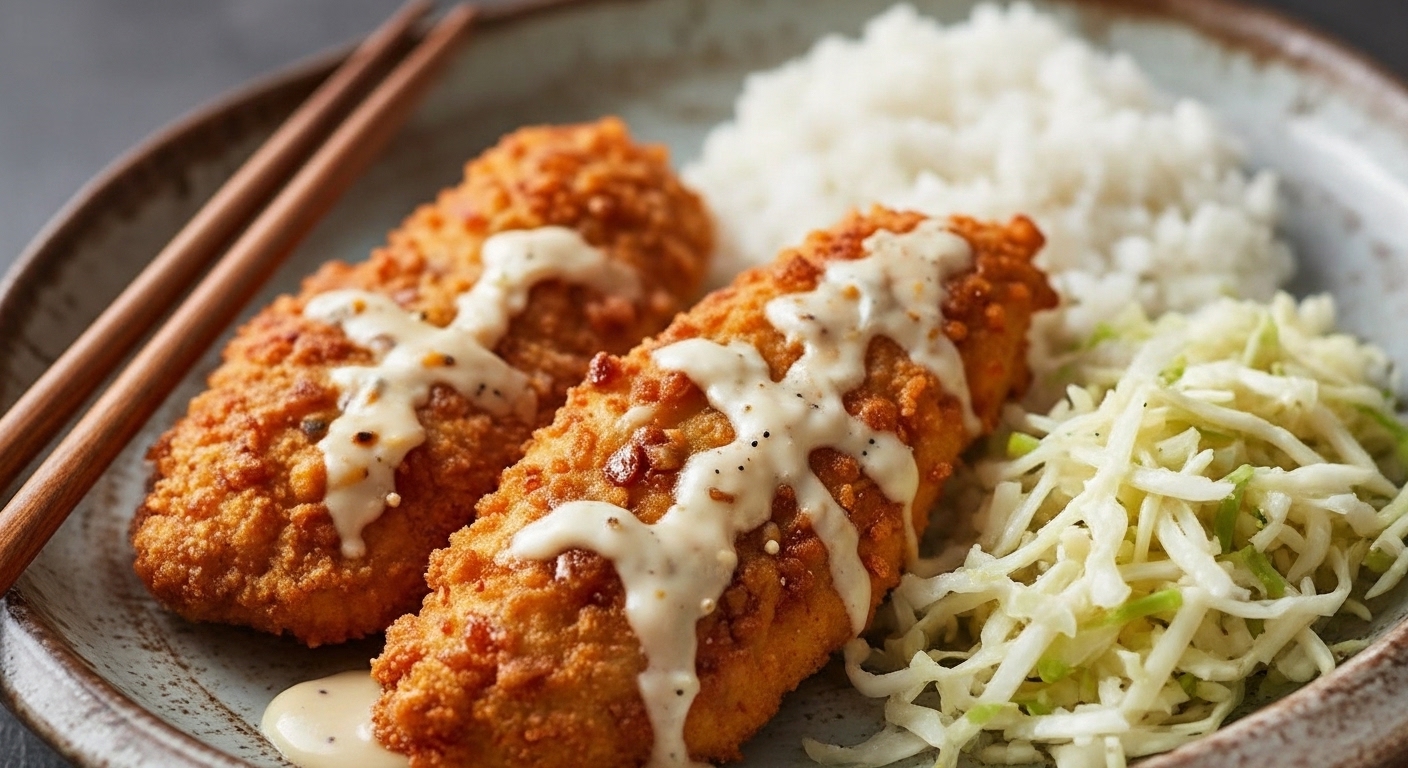
Craving crispy fried chicken with a Japanese twist? Try the juicy, golden-fried Chicken Nanban, which is covered in thick, creamy tartar and drenched in tangy-sweet Nanban sauce. Miyazaki Prefecture in Japan is the source of this delectable comfort food, which you can now prepare at home!
When I first experienced Chicken Nanban at a tiny family restaurant, the combination of the creamy tartar sauce, the vivid Nanban sauce, and the juicy chicken created a flavor explosion that I will never forget. The goal of this recipe is to bring that enchantment into your home kitchen.
What Is Chicken Nanban?
Chicken Nanban is a Japanese fusion dish that originated in Miyazaki Prefecture. It blends Asian ingredients with fried chicken prepared the Western way. The term “Nanban” alludes to the early Portuguese and Spanish influence in Japan, which is why Japanese ingredients are combined with a European-style frying technique.
The nanban sauce, a sweet and sour vinegar-soy mixture, is what really makes nanban chicken unique.
After frying, the chicken is briefly soaked in this flavorful marinade, giving it a complex taste that’s different from anything else you’ve tried.
Chicken Nanban Recipe
Ingredients
For the Chicken:
- 1 boneless, skinless chicken breast or thigh
- Salt and pepper
- All-purpose flour
- 1 egg, beaten
- Neutral oil for frying
To make Nanban Sauce:
- 2 tbsp soy sauce
- 2 tbsp rice vinegar
- 2 tbsp sugar
- 1 tbsp mirin
For Tartar Sauce:
- 1 boiled egg, minced
- ¼ onion, finely chopped (soaked in water and drained)
- ½ Japanese or Persian cucumber, finely chopped
- 3 tbsp Japanese mayonnaise (Kewpie recommended)
- 1 tsp rice vinegar
- Salt and pepper to taste
Instructions
1. Make the Tartar Sauce:
Mix the minced egg, drained onion, cucumber, mayonnaise, rice vinegar, salt, and pepper. Chill until ready to use.
2. Make the Nanban Sauce:
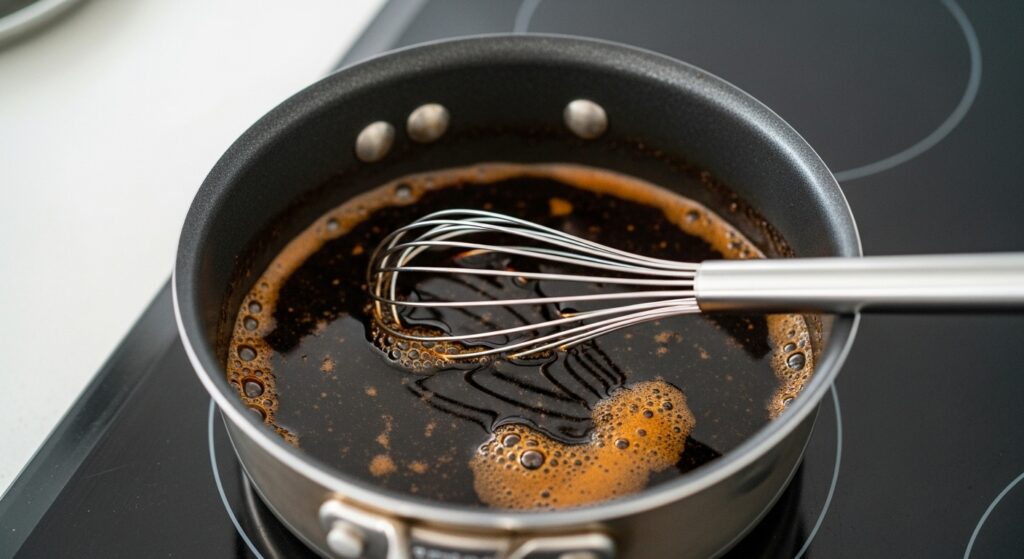
Combine soy sauce, rice vinegar, sugar, and mirin in a saucepan. Simmer until sugar dissolves. Set aside.
3. Prepare the Chicken:
Butterfly the chicken breast or pound the thigh to even thickness. Season with salt and pepper. Dredge in flour, dip in beaten egg, and fry in hot oil (340ºF/170ºC) until golden and cooked through. Let rest on a rack.

4. Sauce the Chicken:
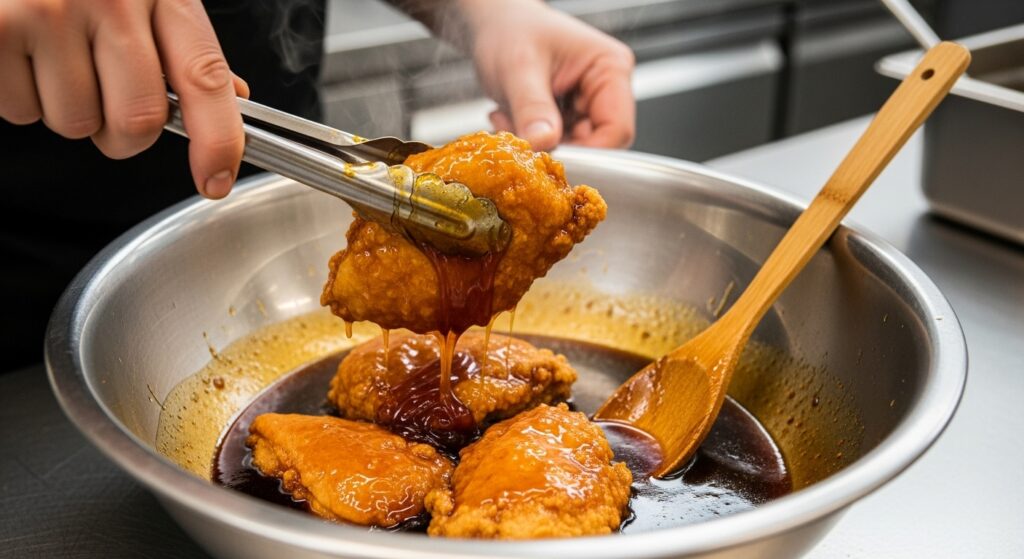
While hot, coat the fried chicken in nanban sauce.
5. Serve:
Slice the chicken and top with tartar sauce. Pair with steamed rice and a crisp salad for a complete meal.
What to Serve With Chicken Nanban
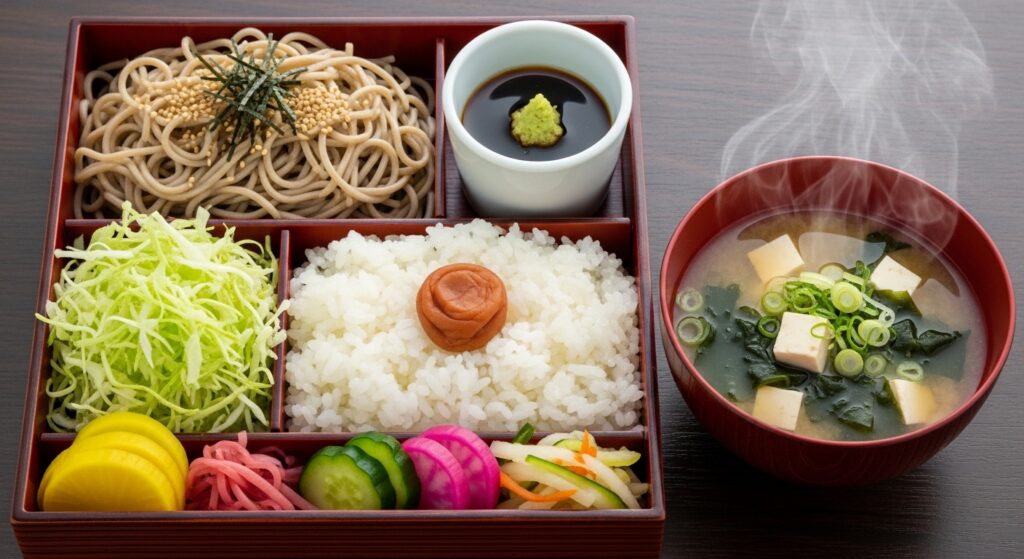
- Steamed white rice – Classic pairing
- Shredded cabbage – Adds freshness and crunch
- Miso soup – For a full Japanese set meal
- Pickled vegetables – Balances the richness
- Cold soba noodles – Great for summer
- Spicy BBQ Chicken Ranch Salad– Healthy and delicious
Chef Tips
- “Freeze potato starch for 30 mins before dredging—it creates an extra-crispy shell.” Chef Nobu
- “Add a splash of dashi to nanban sauce for umami depth.” Chef Morimoto
- “Use thighs, not breast, the fat keeps the meat juicy during frying.” Chef Niki Nakayama
Final Thoughts
Chicken Nanban is a delightful Japanese dish that’s sure to impress with its perfect balance of sweet, tangy, and creamy flavors. Whether you’re an experienced cook or just starting, this recipe is easy to follow and guarantees a delicious result.
I hope you like the recipe. Please try it at home and let us know your thoughts in the comments section.
Browse the full Roast Chicken Recipes collection to discover even more creative ways to enjoy chicken at home.
FAQS
1. What is the difference between chicken Nanban and Karaage?
Karaage is Japanese-style fried chicken, while chicken Nanban is karaage topped with a tangy-sweet vinegar sauce and creamy tartar sauce.
2. What is Japanese Nanban?
Nanban refers to a Japanese dish where fried meat, usually chicken, is dipped in a vinegar-based sauce, often served with tartar sauce.
3. Is Nanban chicken healthy?
It’s flavorful but not super healthy; it’s deep-fried and topped with tartar sauce, so it’s more of an occasional treat.
4. What is the most unhealthy part of the chicken?
The skin and dark meat (like thighs) have more fat and calories compared to leaner white meat like breast.
5. What does Nanban mean?
“Nanban” originally meant “southern barbarian,” referring to the influence of the Portuguese in the 1500s. Today, it reflects Western-style dishes with sweet-sour flavors.
